
Reviews and trust · Response guide · 10 minute read
How to respond to a negative review without making the situation worse
A public response is written for two audiences: the customer who had the experience and every future customer deciding how your business handles a problem.
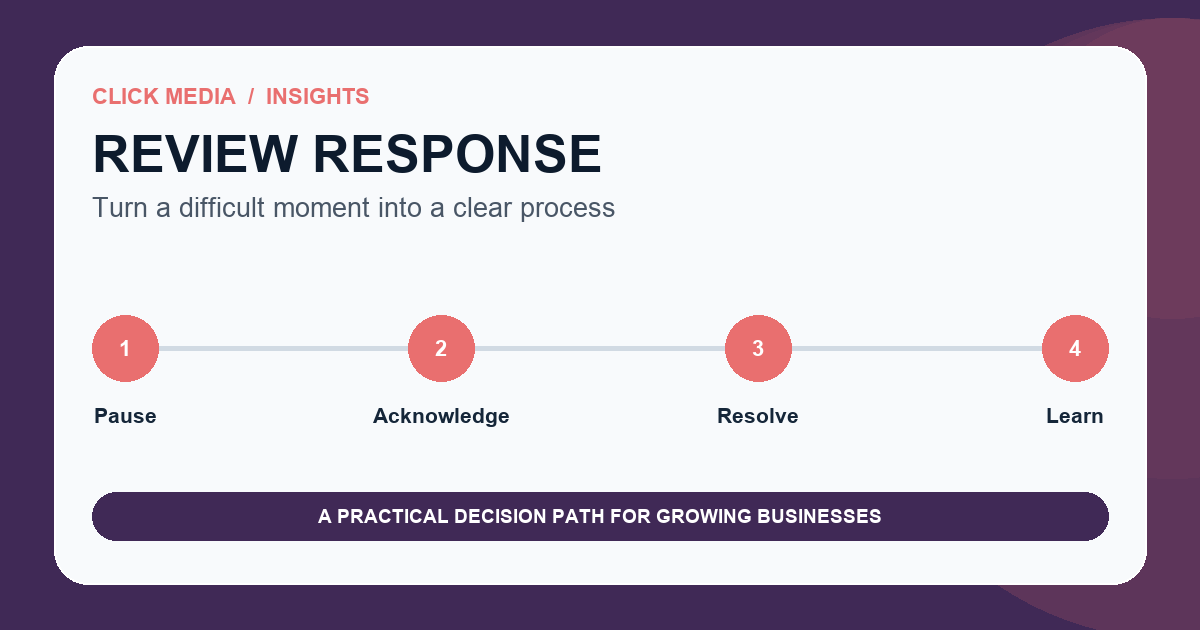
The fastest reply is rarely the best reply. A defensive response can extend the conflict, expose private information, and make the business look less reliable than the original review.
A useful response shows that the concern was heard, the business has a process, and the conversation can continue appropriately. It does not need to win a public argument or admit facts that have not been investigated.
Before replying
Separate emotion, facts, and privacy.
Capture the review, identify the likely transaction, and ask the team for relevant context. Do not post customer records, health information, payment details, addresses, or internal notes to prove a point.
Decide who owns the reply and who owns the private follow-up. A public response without an operating path behind it creates more frustration.
The response structure
Acknowledge, clarify the path, and move the details offline.
Open with a calm acknowledgment. If the concern is clear, address the general service standard and explain how the customer can reach the right person. If the reviewer cannot be identified, say so without implying the experience is fabricated.
Keep the response proportionate. Long rebuttals and point-by-point arguments can make a small issue look larger.
- Thank the reviewer for taking time to share feedback
- Acknowledge the concern without exposing private facts
- Explain the appropriate contact or resolution path
- Close with a professional commitment to review the issue
Policy and reporting
Use reporting for violations, not reputation control.
Google states that a review should be reported when it violates policy. Disagreement or an unfavorable opinion is not enough. Preserve evidence and use the platform's review-management process where appropriate.
Never pressure a customer to remove or change a review as a condition of resolving the underlying service issue.
Operational learning
Turn repeated feedback into a business improvement signal.
Tag recurring themes such as response time, unclear estimates, handoff gaps, scheduling, billing communication, or missed expectations. Review patterns with the team on a schedule.
A professional response protects trust. Fixing the repeated cause protects the business.
A practical next step
Review & Reputation Growth
Best for businesses that need one place to monitor feedback, organize response ownership, and prepare thoughtful drafts with human review.
- A steadier review rhythm
- Faster, more consistent responses
- Useful customer insight
Common questions
Practical answers before you commit.
Should I respond to every negative review?+
Respond when the reply can clarify the process, acknowledge the concern, or provide a next step. Escalate sensitive legal, safety, medical, employment, or privacy matters to the appropriate professional before posting.
Can I ask the customer to remove the review after resolving the issue?+
Focus on resolving the problem. Do not make service, refunds, or support conditional on changing a review. Customers control their own feedback.
When should a review be reported?+
Report it when there is a good-faith reason to believe it violates the platform's content policy, such as spam, prohibited content, conflicts of interest, or exposure of private information.